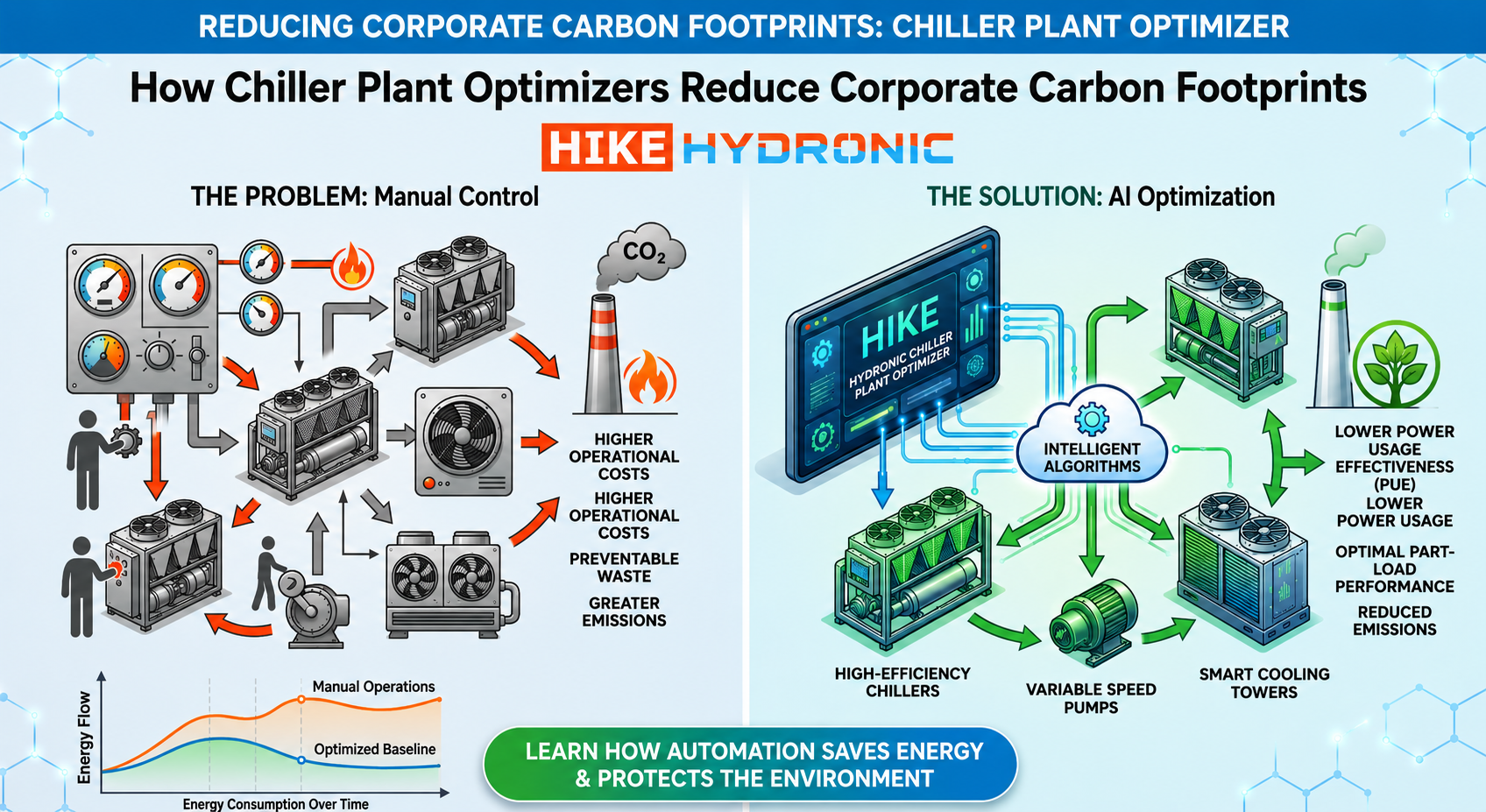
Chiller Plant Optimiser – In large-scale commercial facilities, data centers, and pharmaceutical manufacturing plants, heating, ventilation, and air conditioning (HVAC) systems are the single largest consumer of electrical energy. Within these setups, chiller plants operate as the core cooling heavyweights. Unfortunately, conventional systems run chillers, pumps, and cooling towers independently of each other. This decentralized setup causes severe energy waste and inflates a company’s carbon footprint.
Implementing an intelligent, automated Chiller Plant Optimizer acts as a unified central brain for your mechanical ecosystem. This smart automation system coordinates your entire cooling network to deliver significant environmental and financial returns.
The Technical Problem: Why Traditional Chiller Plants Waste Energy
Most standard industrial cooling plants rely on human supervision or static, manual sequencing logic. These systems frequently suffer from performance bottlenecks:
Short-Cycling Overlap: Chillers turn on and off rapidly to keep up with sudden weather shifts or internal IT heat spikes. This rapid cycling strains electrical grids and degrades internal mechanical parts.
Sub-Optimal Running Points: Multiple chillers often run at full capacity when they could operate much more efficiently at partial loads.
Decoupled Auxiliary Equipment: Secondary components like chilled water pumps and cooling tower fans run at fixed speeds. They fail to adapt to the actual, live demand of the building.
These compounding inefficiencies lead to excessive power consumption, accelerating a facility’s Scope 2 greenhouse gas emissions.
The Solution: How a Chiller Plant Optimizer Cuts Carbon Emissions
An advanced platform like the Hike Hydronic Chiller Plant Optimiser uses real-time monitoring and smart algorithms to turn fragmented equipment into one highly efficient system. It reduces your carbon footprint through three main mechanisms:
1. Intelligent, Efficiency-Based Sequencing
Instead of simply activating a backup machine when temperatures rise, the control system calculates the precise cooling demand. It coordinates multiple chillers to run strictly within their peak “part-load ratio” efficiency zones. By avoiding unnecessary runtime, the system lowers total megawatt-hour consumption right at the source.
2. Variable Load Synchronization
Cooling needs fluctuate constantly based on outdoor humidity, building occupancy, and internal operational processing. A modern optimizer communicates directly with your variable speed drives and smart valves. It automatically scales down pump and fan outputs the moment building cooling demands drop.
3. Predictive Operational Strategies
By continuously monitoring data like flow rates, pump performance, and chilled water temperatures, the automation platform proactively responds to system shifts. This real-time analysis maintains strict thermal stability. It eliminates energy-wasting temperature overshoots before they occur.
The Business Case: Lowering Power Usage Effectiveness (PUE)
| Feature | Conventional Chiller Setup | Optimized Chiller Plant |
|---|---|---|
| Control Logic | Fixed settings or manual intervention | Dynamic, real-time algorithmic sequencing |
| Auxiliary Coordination | Fixed-speed pumps run continuously | Variable pumps scale to match true system load |
| System Security | Manual diagnostics following a equipment trip | Instant fail-safe triggers to switch to standby units |
| Environmental Impact | High carbon emissions due to regular power surges | Lower baseline power usage and minimized carbon output |
For critical infrastructure like data centers, minimizing power consumption directly improves your Power Usage Effectiveness (PUE) rating. In strict settings like pharmaceutical labs, it guarantees precise climate control while cutting daily operational utility bills.
Transitioning to Sustainable Infrastructure
Automating your centralized cooling architecture is one of the fastest, most measurable ways to meet corporate sustainability goals. Transitioning your facility to a modern hydronic optimization framework protects heavy machinery, lowers operational costs, and significantly reduces carbon emissions.
